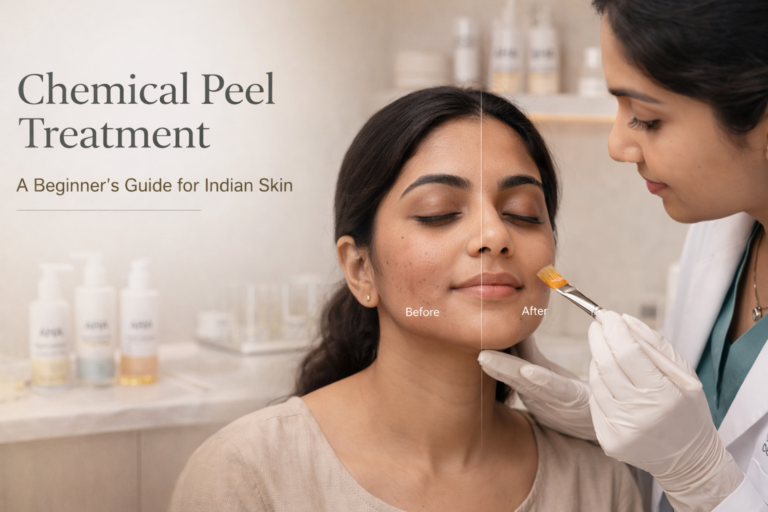
Chemical Peel Treatment: A Beginner’s Guide for Indian Skin
You have probably heard the term “chemical peel” at least once — from a friend who swears by it, a skincare reel you scrolled past, or an ad for a skin clinic near you. But if you are Indian, you have also probably heard the warning: “Chemical peels are not safe for Indian skin.”
That warning is outdated. And it is costing thousands of Chennai patients the skin transformation they have been searching for.
Chemical peel treatment, when performed correctly by a qualified dermatologist using the right formulation for your skin type, is one of the safest and most effective procedures available for Indian skin. A 2024 study in the Journal of Cosmetic Dermatology found that medium-depth chemical peels produced a 72% improvement in acne scarring and pigmentation in Fitzpatrick IV–VI skin types — with less than 4% adverse events under medical supervision.
This beginner’s guide explains exactly what chemical peel treatment is, how it works on Indian skin, what types are available, what chemical peel cost looks like in Chennai, and what you can realistically expect from your first chemical peel.
What Is Chemical Peel Treatment?
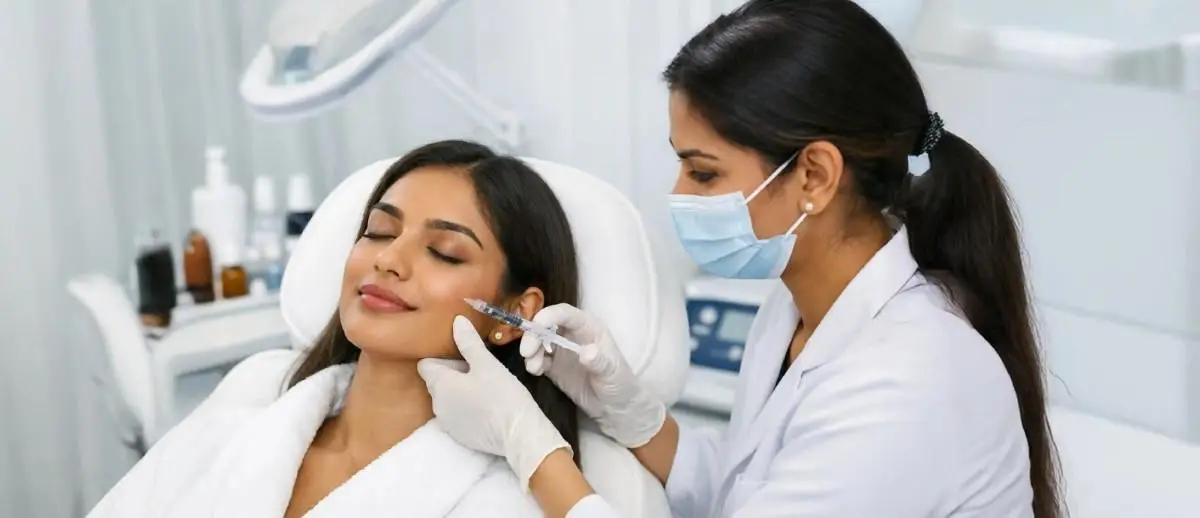
Chemical peel treatment is a clinically supervised skin exfoliation procedure in which a medical-grade acid solution is applied to the skin surface. This solution removes the damaged outer layers of skin — triggering the body’s natural healing process to generate fresher, healthier, more evenly toned skin beneath.
The term “chemical peel” describes the process of controlled chemical exfoliation, not a painful or dangerous burning procedure. According to the American Society for Dermatologic Surgery (ASDS, 2025), chemical peel treatment is one of the top five most requested cosmetic procedures in Asia, with demand growing at approximately 18% annually due to increased awareness of its safety and effectiveness for Asian skin tones.
At Vesta Skin, T Nagar, chemical peel treatment is customised to each patient’s skin type, concern, and Fitzpatrick classification — ensuring the correct formulation and strength is selected before the first session. For patients in Chennai searching for chemical peel near me, Vesta Skin offers medically supervised chemical face peel options for every skin concern and budget.
Is Chemical Peel Treatment Safe for Indian Skin?
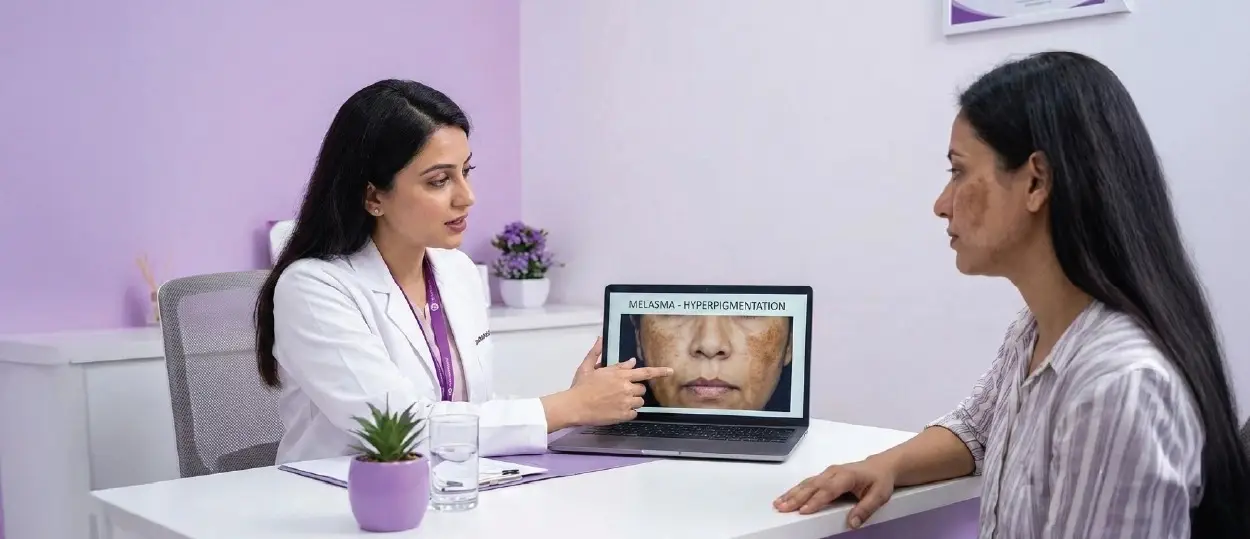
The concern about chemical peel treatment and Indian skin comes from a real — but now largely outdated — clinical risk: post-inflammatory hyperpigmentation (PIH). On Indian skin tones (Fitzpatrick III–V), aggressive chemical peels historically caused hyperpigmentation rather than brightening.
That risk was real with high-strength TCA peels applied to unprepared Indian skin in non-clinical settings. Today, it is not a reason to avoid chemical peel treatment. It is a reason to choose the right clinic and the right dermatologist.
Three Factors That Determine Chemical Peel Safety for Indian Skin
- Peel depth and formulation — Superficial and medium-depth chemical peels are well-tolerated by Indian skin when properly selected. High-strength deep peels require significantly more caution and are rarely the first choice for dark skin tones.
- Pre-treatment preparation — A qualified dermatologist will prescribe a 2–4 week skin preparation protocol before your first chemical peel, typically including a topical retinoid or tyrosinase inhibitor to reduce PIH risk on Indian skin.
- Medical supervision — Chemical peel treatment administered by a trained dermatologist with direct oversight carries a fraction of the adverse event rate compared to the same procedure performed by an untrained technician.
A 2025 meta-analysis in the Indian Journal of Dermatology confirmed that superficial and medium-depth chemical peels are safe and effective for Indian skin when pre-treatment priming and appropriate peel selection are followed — with PIH incidence below 6% across all included studies.
What Types of Chemical Peel Treatment Are Available in Chennai?
Chemical peels are classified by depth — the layer of skin they penetrate. Each depth has different indications, downtime, and suitability for Indian skin. Here is a complete breakdown of chemical peel treatment types available at skin clinics in Chennai:
Superficial Chemical Peels — Best for Chemical Peel Beginners
Superficial chemical peel treatment uses mild acids — typically glycolic acid (20–35%), salicylic acid (20–30%), or lactic acid — to exfoliate only the outermost layer of the epidermis.
- Best for: Dull skin, mild PIH, mild acne, dry or rough texture, first-time chemical peel patients
- Downtime: Zero to minimal — mild flaking for 2–3 days
- Sessions needed: 4–6 sessions, spaced 2–4 weeks apart
- Safety for Indian skin: Excellent — lowest risk of PIH on Indian skin
Medium-Depth Chemical Peels — Best Results for Established Concerns
Medium-depth chemical peel treatment — typically TCA (trichloroacetic acid) at 15–35% or Jessner’s solution — penetrates through the full epidermis and into the upper dermis, stimulating deeper collagen remodelling for acne scars and pigmentation.
- Best for: Moderate acne scarring, moderate pigmentation, melasma, uneven texture, fine lines
- Downtime: 5–10 days of peeling and redness
- Sessions needed: 2–4 sessions, spaced 4–8 weeks apart
- Safety for Indian skin: Good — requires pre-treatment priming and SPF discipline post-peel
Deep Chemical Peels — Rarely Used on Indian Skin
Deep chemical peel treatment (phenol-based) penetrates into the reticular dermis. Due to the high risk of permanent hypopigmentation on Indian skin, deep chemical peels are very rarely recommended for Indian patients and are not typically performed at skin clinics in Chennai.
What to Expect from Your First Chemical Peel Treatment at Vesta Skin
Knowing exactly what happens before, during, and after your chemical peel treatment helps you prepare and protects your results on Indian skin.
Before Your Chemical Peel Treatment
Dr. Uma will conduct a detailed skin assessment at your first consultation — evaluating your Fitzpatrick skin type, active concerns, current skincare routine, and medication history. Patients on certain medications (retinoids, isotretinoin, photosensitising drugs) may need to pause them before chemical peel treatment begins.
A 2–4 week pre-treatment priming protocol using a topical retinoid or brightening cream is prescribed for medium-depth chemical peels to prepare Indian skin and reduce PIH risk.
During Your Chemical Peel Session
The chemical peel procedure typically takes 20–40 minutes. The skin is cleansed, the peel solution is applied evenly using a brush or gauze, and left for a precisely timed period before neutralisation. You will feel a mild tingling or warming sensation — not pain. The session ends with a calming mask and broad-spectrum SPF application.
After Your Chemical Peel Treatment
Skin will appear pink and slightly tighter immediately after the chemical peel. Superficial peels produce mild flaking over 2–3 days. Medium-depth chemical peel treatment produces 5–10 days of visible peeling.
Critical post-chemical peel instructions for Indian skin in Chennai:
- Apply SPF 50 within 30 minutes of leaving the clinic after every chemical peel session — every day
- Do not pick or peel flaking skin — this is the number one cause of PIH after chemical peel on Indian skin
- Avoid active skincare ingredients (retinol, AHA, BHA) for 7 days post-chemical peel
- Avoid direct sun exposure for 2 weeks after medium-depth chemical peel treatment
Frequently Asked Questions
- How many chemical peel sessions do I need in Chennai?
Most patients require 4–6 sessions of superficial chemical peel treatment for dull skin, mild acne, or early pigmentation. Moderate to severe concerns — established PIH, melasma, or acne scarring — typically require 5–8 sessions with a combination of peel depths. Sessions are spaced 2–4 weeks apart at Vesta Skin, T Nagar. (Journal of Cosmetic Dermatology, 2025)
- Can I combine chemical peel treatment with other procedures?
Yes — chemical peel treatment is commonly combined with laser toning, microneedling, and HydraFacial at Vesta Skin for enhanced results on Indian skin. Dr. Uma designs a combination protocol based on your specific concerns. Chemical peels are typically scheduled on alternating session dates with laser or microneedling treatments.
- Will chemical peel treatment make my skin sensitive to Chennai’s heat?
Freshly peeled skin is temporarily more sensitive to UV and heat. For Chennai’s climate, Dr. Uma recommends chemical peel treatment sessions during cooler morning hours, consistent SPF 50 use throughout the course, and avoiding peak sun hours for 2 weeks post-peel. This protocol effectively manages heat and UV sensitivity on Indian skin.
- Is there any downtime after chemical peel treatment?
Superficial chemical peels have zero to minimal downtime — most patients return to work the same day. Medium-depth chemical peel treatment requires 5–10 days of visible peeling and social downtime. All chemical peel downtime expectations are discussed in detail at your consultation at Vesta Skin, T Nagar, Chennai.
- How is chemical peel treatment different from a HydraFacial?
A HydraFacial uses physical suction and serum infusion to cleanse and hydrate — no chemical exfoliation involved. Chemical peel treatment uses acid solutions to remove damaged skin layers, stimulating collagen production and cell renewal. For active acne and pigmentation on Indian skin, chemical peels deliver deeper and longer-lasting results. For immediate hydration and glow, HydraFacial is preferred.
The Bottom Line — Chemical Peel Treatment Is One of the Best Investments for Indian Skin
Chemical peel treatment is not something to fear. It is one of the most evidence-backed, dermatologist-trusted, and versatile skin treatments available — and when done correctly, it is entirely appropriate for Indian skin in Chennai.
The key is choosing a clinic where a qualified dermatologist personally supervises your chemical peel treatment, selects the right formulation for your skin type, prepares your skin properly before treatment, and guides your aftercare in Chennai’s specific climate.
Key takeaways:
- Chemical peel treatment is safe for Indian skin when performed by a qualified dermatologist
- Superficial peels are ideal for beginners — zero downtime, excellent tolerance on Indian skin
- Chemical peel cost in Chennai ranges from ₹1,500 per session to ₹25,000+ for a full course
- PIH risk is manageable with proper pre-treatment preparation and consistent SPF use post-peel
- Combination chemical peel protocols with laser or microneedling deliver the best long-term results