PRP Hair Treatment in Chennai: Does It Really Regrow Hair?
PRP — Platelet-Rich Plasma — is a clinically studied, non-surgical hair loss treatment that uses growth factors concentrated from your own blood to stimulate dormant hair follicles. It does not create new follicles but it can reactivate existing ones. Evidence supports its effectiveness for androgenetic alopecia and early-to-moderate hair thinning. It does not work for completely bald areas where follicles are already dead. Most patients need 3 to 6 initial sessions followed by maintenance every 3 to 6 months.
Hair loss in India is a quietly pervasive problem. According to dermatological surveys, over 60% of Indian men and close to 30% of Indian women experience significant hair thinning or loss by their early forties — with many starting to notice it in their late twenties. The reasons range from genetics and hormones to nutritional deficiencies, stress, and Chennai’s hard water, which is a well-documented contributor to hair shaft damage and scalp health decline in the city.
Against this backdrop, PRP hair treatment has emerged as one of the most discussed and sought-after non-surgical solutions. But the question people ask — and deserve an honest answer to — is whether it actually works.
This guide breaks down the science behind PRP, what the clinical evidence says about its effectiveness, who it works for, who it does not, what the treatment involves, and how to set realistic expectations before committing to a course of treatment.
What Is PRP and How Does It Work on Hair Loss?
Platelet-Rich Plasma (PRP) is a concentration of your own blood’s platelets — the cells responsible for healing, clotting, and tissue regeneration. Your blood contains red cells, white cells, plasma, and platelets. When a small sample of your blood is processed through a centrifuge, it separates into these components. The platelet-rich layer is extracted and prepared for injection.
Platelets contain a high concentration of growth factors — proteins that signal cells to repair, regenerate, and proliferate. These include:
- Platelet-Derived Growth Factor (PDGF) — stimulates cell growth and blood vessel formation
- Vascular Endothelial Growth Factor (VEGF) — promotes angiogenesis, improving blood supply to follicles
- Epidermal Growth Factor (EGF) — triggers cell growth and differentiation
- Insulin-Like Growth Factor (IGF-1) — prolongs the anagen (active growth) phase of the hair cycle
- Transforming Growth Factor (TGF) — regulates follicle cycling
When concentrated PRP is injected directly into the scalp at the level of the hair follicles, these growth factors are delivered in high doses precisely where they are needed. The biological effect is twofold: existing dormant follicles are stimulated back into active growth, and the micro-environment of the scalp — blood supply, cellular activity, sebaceous gland function — is improved to sustain healthier hair growth over time.
The critical distinction: PRP does not create new hair follicles from scratch. It reactivates follicles that are dormant but still viable. If a follicle has been completely destroyed — either through prolonged hormonal miniaturisation or scarring — PRP cannot regrow hair in that area.
What Does the Clinical Evidence Actually Say?
This is where honest communication becomes important. PRP is not a fringe or unproven treatment — it has a growing and reasonably consistent body of clinical evidence behind it. But it is also not a guaranteed cure for all types of hair loss.
A 2019 systematic review published in Aesthetic Plastic Surgery analysing 11 randomised controlled trials found that PRP significantly increased hair density, hair count per square centimetre, and patient satisfaction scores compared to placebo groups in patients with androgenetic alopecia.
A 2020 meta-analysis in the Journal of Cosmetic Dermatology reviewed 19 studies involving over 460 patients and concluded that PRP demonstrated a statistically significant improvement in hair density and thickness — particularly in patients with early to moderate hair loss — compared to control groups receiving no treatment.
However, the same body of research consistently notes several important caveats:
- Standardisation varies widely — the concentration of platelets, the preparation method, the number of sessions, and the injection technique differ significantly between studies and clinics, making direct comparisons difficult
- Results are most consistent in early-to-moderate hair loss — patients with advanced loss or large bald areas show considerably less response
- Maintenance is necessary — the effects of PRP are not permanent; follicle activity tends to decline again without periodic maintenance sessions
- Individual response varies — some patients respond dramatically, others see modest improvement, and a small percentage show minimal change
The honest summary: PRP has solid evidence behind it for the right candidate, administered correctly, with realistic expectations. It is not a miracle cure, and it is not appropriate for all types or stages of hair loss.
Who Is PRP Hair Treatment Right For?
PRP produces its most consistent results in the following profiles:
Ideal Candidates
- Androgenetic alopecia (male or female pattern hair loss) — particularly in the early to moderate stages where follicle miniaturisation is underway but follicles are still present
- Diffuse hair thinning — generalised reduction in hair density across the scalp without complete bald patches
- Alopecia areata — patchy hair loss caused by an autoimmune response (evidence is more limited here but shows promise in smaller studies)
- Hair loss following nutritional deficiency, postpartum shedding, or stress — where the underlying trigger has been addressed but follicles need stimulation to recover
- Post-hair transplant recovery — PRP is frequently used alongside FUE hair transplantation to accelerate graft survival and improve density outcomes
Poor Candidates
- Complete bald patches where follicles are absent — PRP requires viable follicles to work on
- Scarring alopecia — conditions like lichen planopilaris or frontal fibrosing alopecia where the follicles have been destroyed by inflammatory scarring
- Active scalp infections, psoriasis, or seborrhoeic dermatitis — the scalp needs to be in a stable, healthy state before PRP
- Patients on blood thinners — anticoagulant medications affect platelet function and may make PRP less effective or inadvisable
- Patients with platelet disorders or certain systemic conditions — a medical review before treatment is essential
The PRP Hair Treatment Process: Step by Step
Understanding what the procedure involves helps remove the anxiety that many patients feel about any injectable treatment.
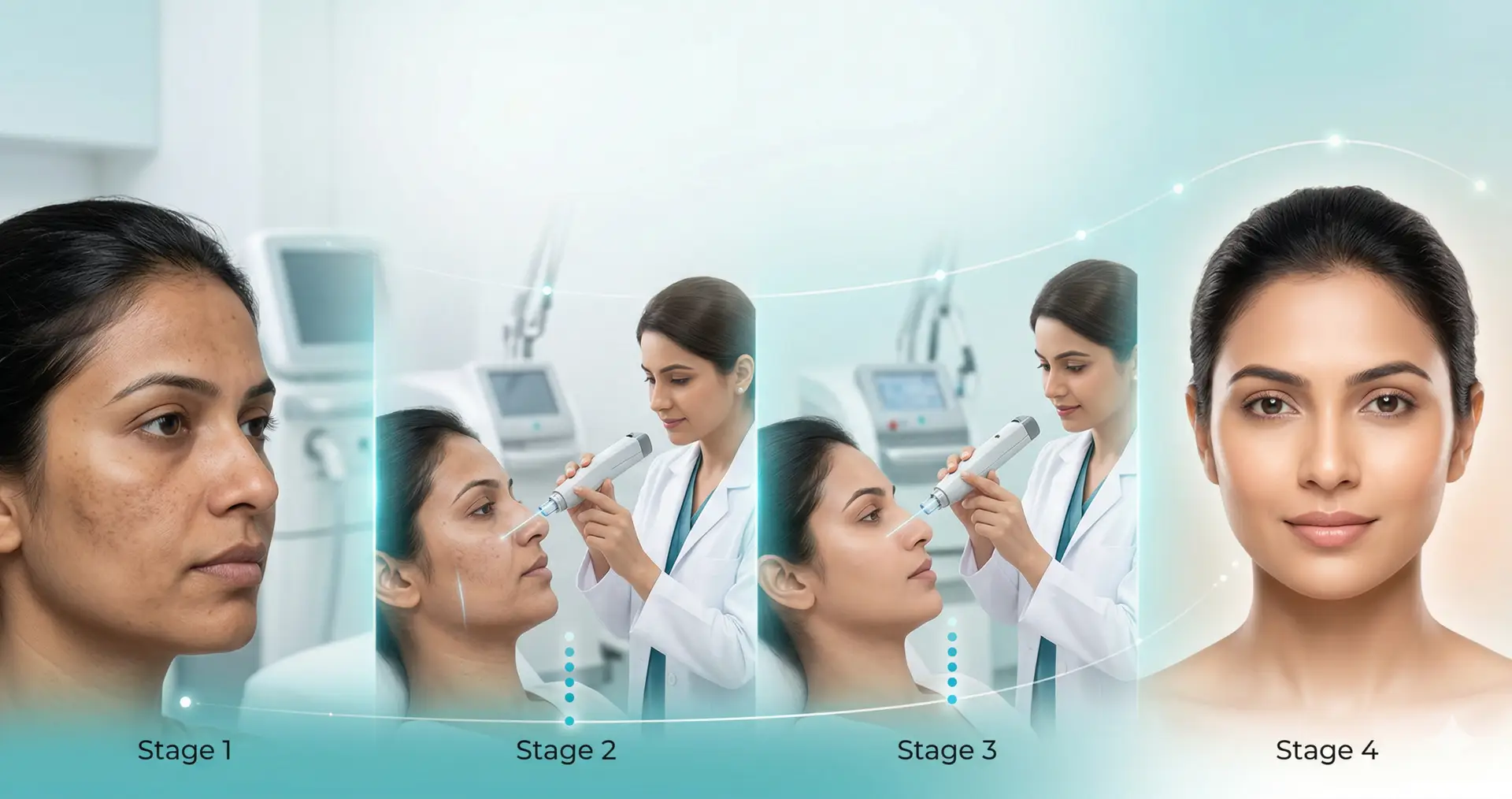
Step 1 — Consultation and Scalp Assessment
Before any PRP session, a thorough scalp assessment is performed — evaluating the pattern and extent of hair loss, scalp condition, hair shaft characteristics, and any underlying factors contributing to the loss. At Vesta Skin by Dr. Uma, this assessment is done during a free initial consultation, and a personalised hair regrowth treatment plan is designed based on individual findings rather than a standardised protocol.
Step 2 — Blood Collection
A small blood sample — typically 10 to 20 ml — is drawn from a vein in your arm in the same way as a standard blood test. The amount is minimal and does not cause any meaningful fatigue or discomfort.
Step 3 — Centrifugation and Preparation
The blood sample is placed in a sterile centrifuge and spun at a controlled speed for 8 to 12 minutes. This process separates the blood into its component layers. The platelet-rich plasma layer — typically a pale yellow fluid — is carefully extracted and prepared for injection. Some clinics add an activating agent such as calcium chloride at this stage to further stimulate platelet degranulation and growth factor release.
Step 4 — Scalp Injection
The prepared PRP is injected into the scalp at intervals of approximately 1 to 1.5 centimetres, targeting the areas of thinning or loss at the level of the hair follicle bulb — typically 4 to 6 mm deep. A topical anaesthetic cream is applied to the scalp beforehand to minimise discomfort. Most patients describe the sensation as mild pressure with occasional brief stinging. The injection phase takes approximately 20 to 30 minutes.
Step 5 — Post-Treatment Care
After the session, patients can return to their normal activities immediately. The scalp may feel slightly tender or show minor redness at injection points, which resolves within a few hours. Hair washing is typically advised from the following day, with avoidance of harsh chemical treatments for 48 to 72 hours.
The entire appointment — from blood draw to completion — takes approximately 45 to 60 minutes.
How Many PRP Sessions Do You Actually Need?
This depends on the type, cause, and severity of your hair loss, but general clinical guidance is as follows:
Areas of high movement — like the lips — metabolise filler more quickly than areas of relative stillness, like the temples or jawline.
A Key Advantage: Reversibility
One of the most important and frequently overlooked advantages of hyaluronic acid fillers is that they are reversible. An enzyme called hyaluronidase can dissolve HA filler rapidly if a result is unsatisfactory or a complication occurs. This provides a meaningful safety net that is not available with permanent or semi-permanent filler options — which is one reason why HA-based fillers have become the global standard in aesthetic medicine.
Side-by-Side Comparison: Fillers vs Botox
Can Botox and Fillers Be Used Together?
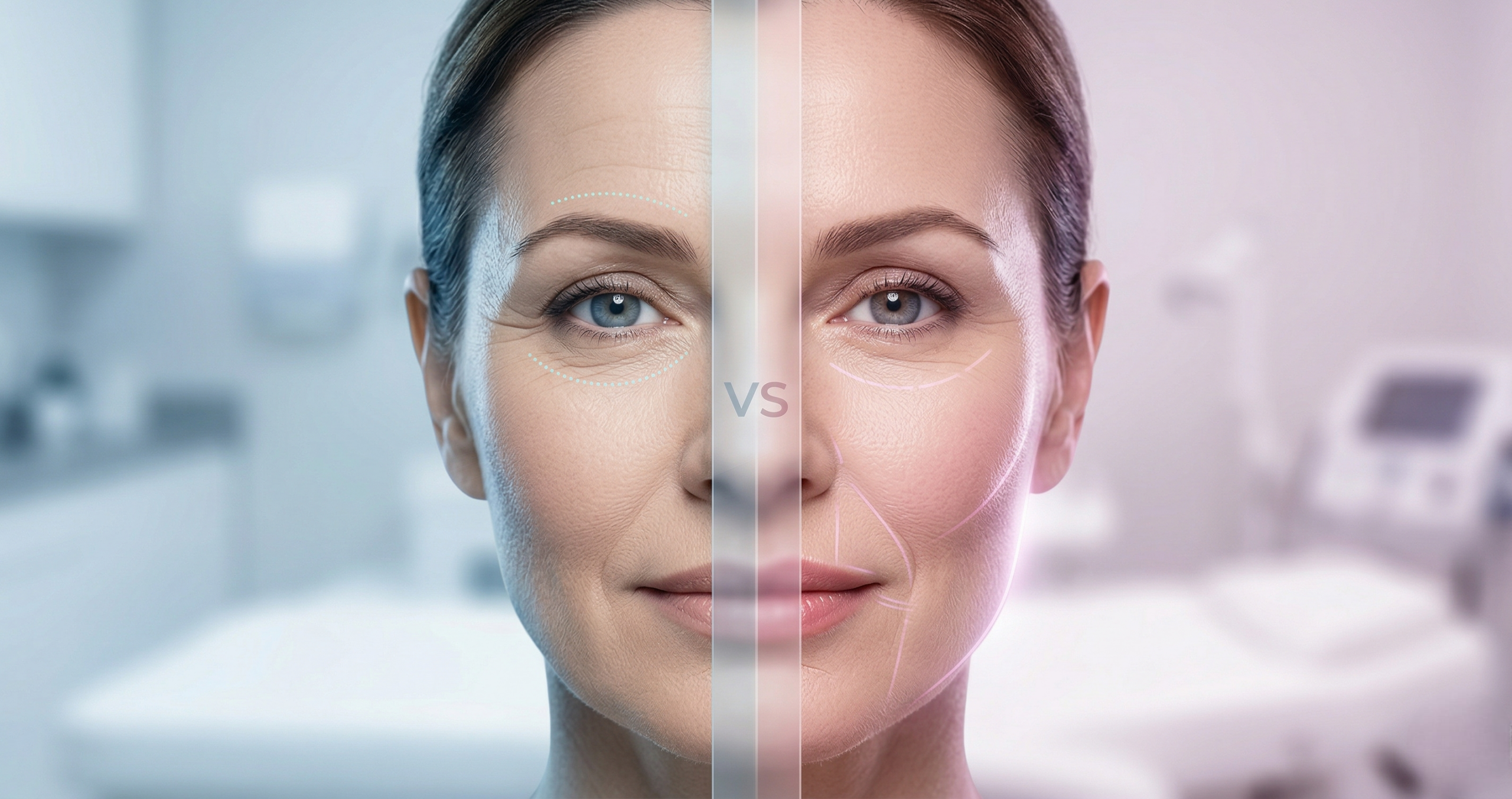
Yes — and in many cases, they should be. The two treatments address different aspects of facial ageing and are not mutually exclusive. In fact, the combination approach — sometimes called a liquid facelift — is one of the most effective non-surgical strategies for comprehensive facial rejuvenation.
A common combined approach might look like:
- Botox to soften forehead lines, frown lines, and crow’s feet
- Fillers to restore volume in the cheeks, soften nasolabial folds, and define the jawline
- The result is a face that looks rested, refreshed, and naturally proportioned — rather than the “treated” appearance that comes from overdoing either product in isolation
The key to a natural-looking combined result is a conservative, anatomy-informed approach — which is why the experience and skill of the injecting clinician matters as much as the products themselves.
Which One Does Your Face Actually Need?
Use this as a general guide — but remember, only a qualified dermatologist examining your face in person can give you a definitive answer:
You likely need Botox if:
- Your wrinkles appear mainly during facial expressions and soften when your face is at rest
- You want to address forehead lines, frown lines, or crow’s feet
- You are in your late twenties to early forties with early-to-moderate dynamic wrinkling
- You want jawline slimming due to masseter hypertrophy
- You are bothered by a gummy smile
You likely need dermal fillers if:
- Your wrinkles or hollows are visible even when your face is completely relaxed
- You have lost cheek volume or facial fullness
- You have under-eye hollows, tear troughs, or a tired appearance unrelated to movement
- You want more defined lips, a sharper jawline, or improved chin projection
- You are in your mid-thirties or older with noticeable volume loss
You likely need both if:
- You have a combination of dynamic wrinkles and volume loss — which is the case for most patients over 35
- You want comprehensive rejuvenation rather than addressing a single concern in isolation
Important Safety Considerations
Both treatments should only be administered by qualified medical professionals — dermatologists, plastic surgeons, or trained cosmetic physicians — in a clinical setting. In India, the growing number of non-medical practitioners offering injectables in non-clinical environments is a significant safety concern.
Specific risks to be aware of:
- Botox risks: Temporary bruising at the injection site, headache, eyelid drooping (ptosis) if incorrectly placed near the brow, and asymmetry. All of these resolve as the product metabolises.
- Filler risks: Bruising, swelling, asymmetry, nodule formation, and — in rare but serious cases — vascular occlusion if filler is inadvertently injected into a blood vessel. This risk is substantially reduced when treatment is performed by an experienced clinician using proper technique, aspiration, and cannulas where appropriate.
Always ask your clinician about their qualifications, the products they are using, whether the product is licensed, and what their protocol is in the event of a complication.
At Vesta Skin by Dr. Uma, both anti-wrinkle treatment and dermal filler procedures are performed exclusively by Dr. Uma Maheswari — a qualified dermatologist trained internationally — using premium, licensed injectable products in a fully clinical environment.
What Does an Honest Consultation Look Like?
Before committing to either treatment, a good consultation should include:
- A detailed review of your specific concerns and what you hope to achieve
- An honest assessment of whether the treatment you are asking for is actually the right one for your concern
- A discussion of realistic expectations — including what the treatment cannot do
- Full transparency on the products being used, their longevity, and associated costs
- A clear explanation of potential risks and how the clinic handles complications
Be cautious of any clinic that agrees immediately to whatever you request without evaluating your face, or that discourages questions. The best aesthetic outcomes come from a collaborative conversation between patient and clinician — not a transactional appointment.
For those in Chennai looking for a thorough pre-treatment assessment for fillers or anti-wrinkle treatment, Vesta Skin offers a free initial consultation where Dr. Uma evaluates your facial anatomy and recommends the most appropriate treatment approach. Book your consultation here.
You can also explore anti-aging treatments and the full range of skin treatments at Vesta Skin for a broader understanding of what is available.
Frequently Asked Questions
1. Does Botox make your face look frozen?
Only when overdone or incorrectly placed. A skilled clinician uses conservative doses that soften wrinkles while preserving natural facial movement and expression. The “frozen” look is the result of poor technique or excessive product — not an inherent property of Botox.
2. Do dermal fillers look natural?
When placed by an experienced injector who respects natural facial proportions, HA fillers look entirely natural — enhancing your features rather than changing them. Overfilled results are a sign of excessive product use, not the nature of the treatment.
3. At what age should you start Botox or fillers?
There is no universal answer. Botox is sometimes used preventively in the mid-to-late twenties for patients with strong muscular activity. Fillers are more commonly used from the mid-thirties when volume loss becomes clinically visible. The right time is when a qualified clinician agrees that the treatment is appropriate for your concern.
4. Can fillers be dissolved if I do not like the result?
Yes — hyaluronic acid fillers can be dissolved rapidly using hyaluronidase injections. Results from dissolving are visible within 24 to 48 hours.
5. How much do dermal fillers and Botox cost in Chennai?
Pricing varies depending on the product used, the number of areas treated, and the clinic. Contact Vesta Skin for a transparent, personalised quote following your consultation.
6. Is there downtime after either treatment?
Both treatments have minimal downtime. Some bruising or swelling at the injection site is possible with fillers — particularly in high-vascularity areas like the lips — and typically resolves within 3 to 5 days. Botox has virtually no downtime.
Final Thoughts
Dermal fillers and Botox are both effective, well-studied treatments — but they are not interchangeable, and treating them as the same thing leads to mismatched results.
The simplest way to think about the decision: if your concern is movement-driven and your skin springs back when your face is relaxed, Botox is likely the more appropriate starting point. If your concern is about hollowness, lost volume, or lines that are visible at rest, fillers are the better fit. And if you have both — which most people over 35 do — a combination approach is usually the most effective path.
Whatever you decide, the quality of the outcome depends far more on the clinician performing the treatment than on the product itself. Choose a qualified dermatologist, ask questions, and expect honesty about what each treatment can and cannot do for your specific face.
For those in Chennai seeking a thorough, honest assessment of which injectable treatment is right for them, Vesta Skin by Dr. Uma at T Nagar offers free consultations, transparent treatment planning, and procedures performed exclusively under dermatologist supervision.
📞 +91 7709393369 / 9342548815
📍 Third Floor, Villa, 12/26, Coats Road, T Nagar, Chennai — 600017