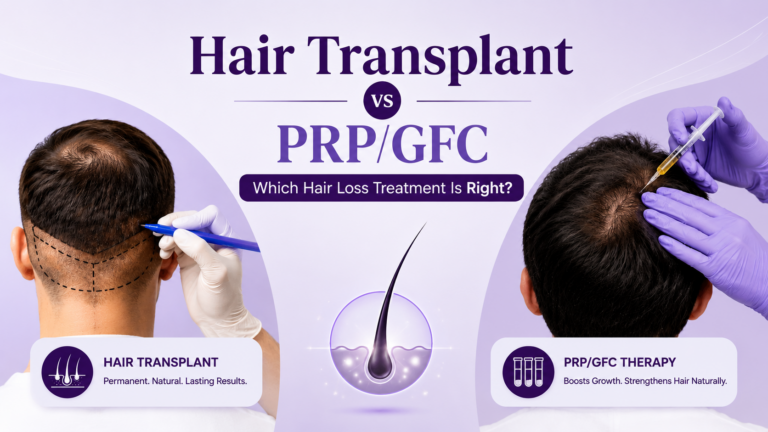
Hair Transplant vs PRP/GFC: Which Hair Loss Treatment Is Right?
It is one of the most talked-about skin treatments in the world — and one of the most misunderstood. The Vampire Facial gained global attention when celebrities made it famous, but behind the dramatic before-and-after photos is genuinely compelling clinical science that dermatologists have been using for decades.
If you are considering a Vampire Facial in Chennai and want to understand exactly what it does, whether PRP facial treatment is right for your skin type, and what it costs — this guide gives you everything you need to make an informed decision.
A 2024 meta-analysis published in the Journal of Cosmetic and Laser Therapy found that PRP facial treatment produced statistically significant improvement in skin texture, hydration, and fine line appearance in 82% of patients across all Fitzpatrick skin types — making it one of the few advanced natural skin rejuvenation treatments with a proven safety and efficacy record for Indian skin.
What Is a Vampire Facial and How Does PRP Facial Treatment Work?
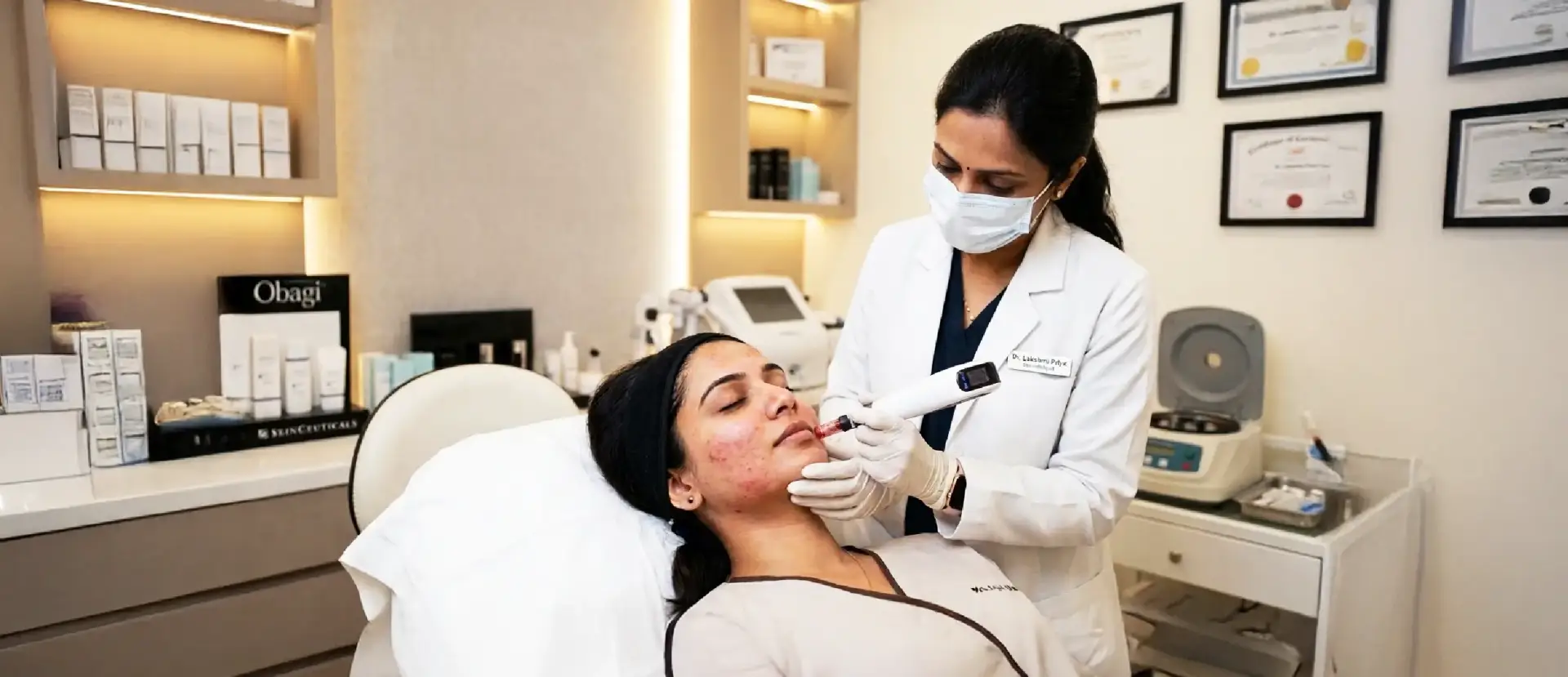
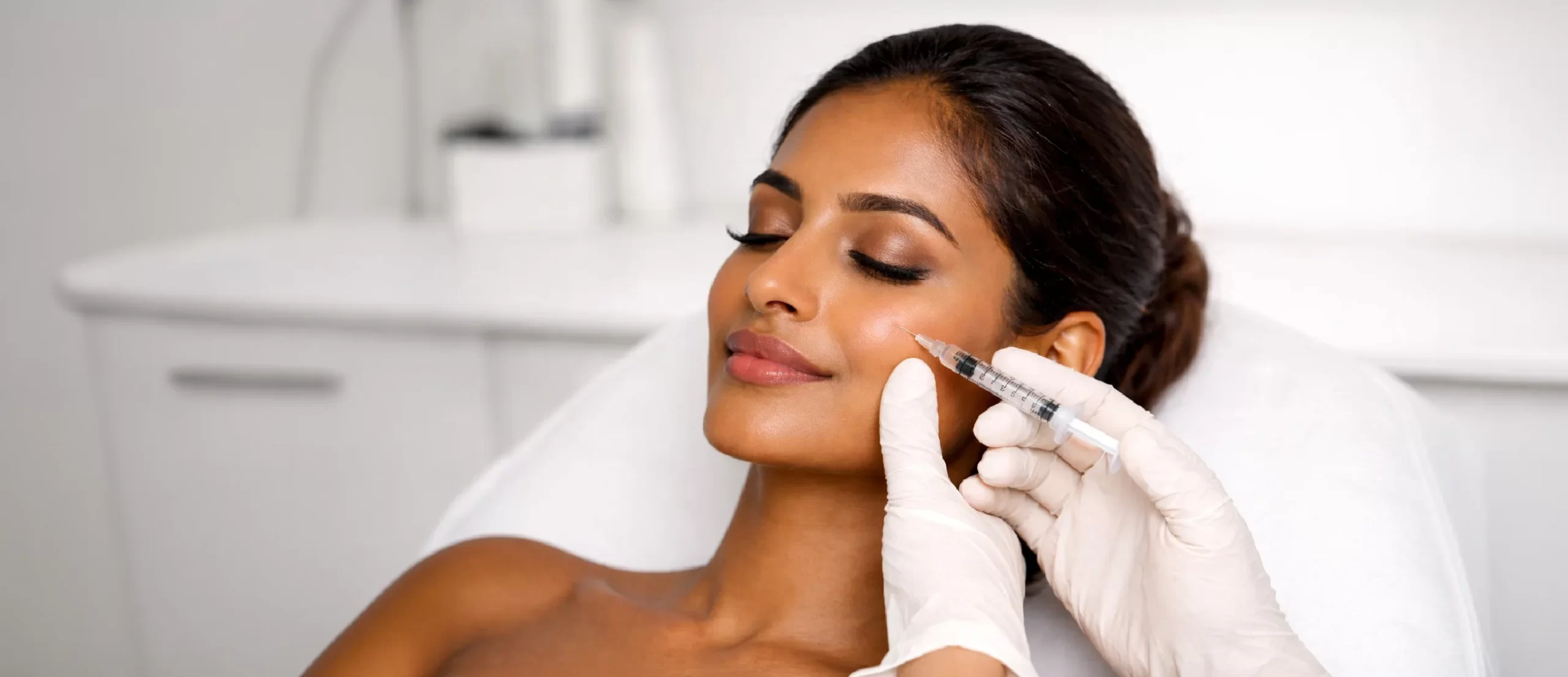
The Vampire Facial — medically known as PRP Facial Treatment or Platelet-Rich Plasma Facial — combines microneedling with topical or intradermal application of PRP extracted from the patient’s own blood. Here is the step-by-step science behind what happens during a Vampire Facial in Chennai:
- Step 1 — Blood draw: A small amount of the patient’s blood (10–20ml) is drawn — similar to a standard blood test
- Step 2 — PRP extraction: Blood is centrifuged to separate platelet-rich plasma. The resulting PRP contains 3–5x the normal concentration of growth factors
- Step 3 — Numbing: Topical numbing cream is applied for 20–30 minutes before microneedling PRP treatment begins
- Step 4 — PRP application: The concentrated PRP is applied topically before microneedling or injected directly into targeted areas
- Step 5 — Growth factor activation: Platelet growth factors (PDGF, TGF-β, VEGF, EGF) activate fibroblasts, stimulate collagen synthesis, and promote neovascularisation
According to a 2025 review in Dermatologic Surgery, PRP facial treatment initiates a three-phase tissue regeneration response that continues for 3–6 months after each Vampire Facial session — meaning your skin keeps improving long after you leave the clinic.
What Are the Benefits of Vampire Facial (PRP Facial) for Indian Skin in Chennai?
The Vampire Facial delivers multiple simultaneous benefits — which is why it has become one of the most requested skin rejuvenation treatment options at dermatology clinics in Chennai. Here is what the clinical evidence shows PRP facial treatment actually achieves on Indian skin:
Improvement in Skin Texture and Pore Size
PRP growth factors stimulate collagen and elastin production in the dermis, leading to visibly smoother skin texture and reduced pore appearance. A clinical study in the Journal of Dermatological Treatment (2024) found that 3 sessions of PRP facial treatment produced a 68% improvement in skin texture scores among South Asian patients with enlarged pores and uneven tone.
Reduction in Fine Lines and Early Signs of Ageing
The collagen remodelling triggered by Vampire Facial treatment is particularly effective for superficial to moderate fine lines — including forehead lines, crow’s feet, and perioral wrinkles. Unlike Botox, PRP facial treatment improves overall skin quality rather than simply paralysing muscles — making Vampire Facial results look natural and progressive over time.
Acne Scar Improvement with Microneedling PRP Treatment
When combined with microneedling — the standard Vampire Facial protocol — PRP facial treatment significantly enhances acne scar remodelling. The American Academy of Dermatology (AAD, 2025) reports that combined microneedling PRP treatment produces 40–55% greater improvement in acne scar depth scores compared to microneedling alone — making Vampire Facial the preferred acne scar treatment PRP approach at Vesta Skin.
Skin Brightening and Natural Glow
The neovascularisation stimulated by PRP facial treatment improves micro-circulation in the skin, delivering more oxygen and nutrients to the dermal layers. This produces a visible glow and sustained hydration improvement that patients notice within 2–3 weeks of their first Vampire Facial session — making it a popular skin brightening treatment Chennai patients request.
Who Should Try a Vampire Facial in Chennai? — Ideal Candidates
PRP facial treatment is remarkably well-suited to a broad range of patients — and particularly well-suited to Indian skin in Chennai. Here is who benefits most from a Vampire Facial:
Ideal Candidates for Vampire Facial PRP Treatment
- Patients with acne scars — especially rolling and boxcar scars that have not responded adequately to chemical peels alone
- Patients experiencing early to moderate signs of skin ageing — fine lines, loss of firmness, dullness, and uneven tone
- Patients dealing with post-inflammatory hyperpigmentation (PIH) following acne on Indian skin
- Patients with enlarged pores and rough skin texture seeking a non-laser skin rejuvenation treatment Chennai option
- Patients who want natural skin rejuvenation treatment without injectables — using their body’s own growth factors
- Patients who have tried multiple topical products without satisfactory improvement and want clinical-grade natural skin rejuvenation treatment
Who Should Not Have a Vampire Facial Treatment
- Patients with active acne breakouts — Vampire Facial should be performed on clear skin
- Patients with blood clotting disorders or on anticoagulant medication
- Patients with active skin infections, eczema flares, or open wounds in the treatment area
- Patients with very low platelet counts (thrombocytopenia)
- Pregnant or breastfeeding patients
How Many Vampire Facial Sessions Do You Need for Best Results in Chennai?
Most patients at skin clinics in Chennai require 3–4 PRP facial treatment sessions for optimal Vampire Facial results, spaced 4–6 weeks apart. Here is what to expect across a standard Vampire Facial course:
- Session 1: Initial glow and skin softening visible within 2–3 weeks. Pore size visibly reduced. Skin hydration improved from the first Vampire Facial
- Session 2: Texture improvement deepens. Acne scar edges begin softening. Fine lines visibly reduced after the second PRP facial treatment session
- Session 3: Collagen remodelling peaks. Skin tone evens out. Maximum Vampire Facial glow and firmness visible — natural skin rejuvenation treatment at its best
- Session 4 (if required): Maintenance and consolidation of Vampire Facial results, particularly beneficial for moderate acne scarring
Full results from the final PRP facial treatment session continue improving for 3–6 months as collagen maturation completes. Annual maintenance Vampire Facial sessions are recommended to sustain results on Indian skin in Chennai’s UV-intense environment.
What to Expect During and After Your Vampire Facial at Vesta Skin, T Nagar
During the Vampire Facial Procedure
The PRP facial treatment procedure takes 60–75 minutes including blood draw, PRP preparation, numbing, and microneedling. You will experience mild pressure and vibration from the microneedling device. Most patients rate the Vampire Facial experience as 2–3 out of 10 for discomfort — comparable to a mild stinging sensation.
Immediately After Vampire Facial Treatment
Skin will appear red and flushed — similar to a moderate sunburn. This is entirely normal and resolves within 12–24 hours for most patients after their PRP facial treatment. Mild peeling and sensitivity lasts 1–3 days as microneedling channels close and skin regeneration begins.
Recovery Timeline After PRP Facial Treatment in Chennai
- Days 4–7: Redness subsides. Skin begins to feel noticeably smoother. Vampire Facial glow becomes visible
- Weeks 2–6: Progressive improvement in texture, hydration, and evenness as collagen synthesis peaks from the PRP facial treatment
- Months 2–6: Ongoing collagen maturation deepens Vampire Facial results — skin continues improving even without additional sessions
Frequently Asked Questions — Vampire Facial (PRP Facial) in Chennai
- Is Vampire Facial safe for Indian skin in Chennai?
Yes. PRP facial treatment uses the patient’s own blood — making allergic reactions biologically impossible. The primary risks on Indian skin are temporary post-inflammatory redness and low PIH risk if post-treatment sun protection is not followed. At Vesta Skin, T Nagar, Dr. Uma prescribes a Chennai-specific aftercare protocol with SPF 50 to protect Indian skin post-Vampire Facial. (AAD, 2025)
- How long do Vampire Facial results last in Chennai?
Results from a full 3–4 session Vampire Facial course at Chennai skin clinics typically last 12–18 months with annual maintenance sessions. The collagen produced during PRP facial treatment is your body’s own natural collagen — it does not degrade the way filler does. Consistent SPF use and a dermatologist-prescribed routine significantly extend the duration of Vampire Facial results on Indian skin.
- Can I combine Vampire Facial with other skin treatments in Chennai?
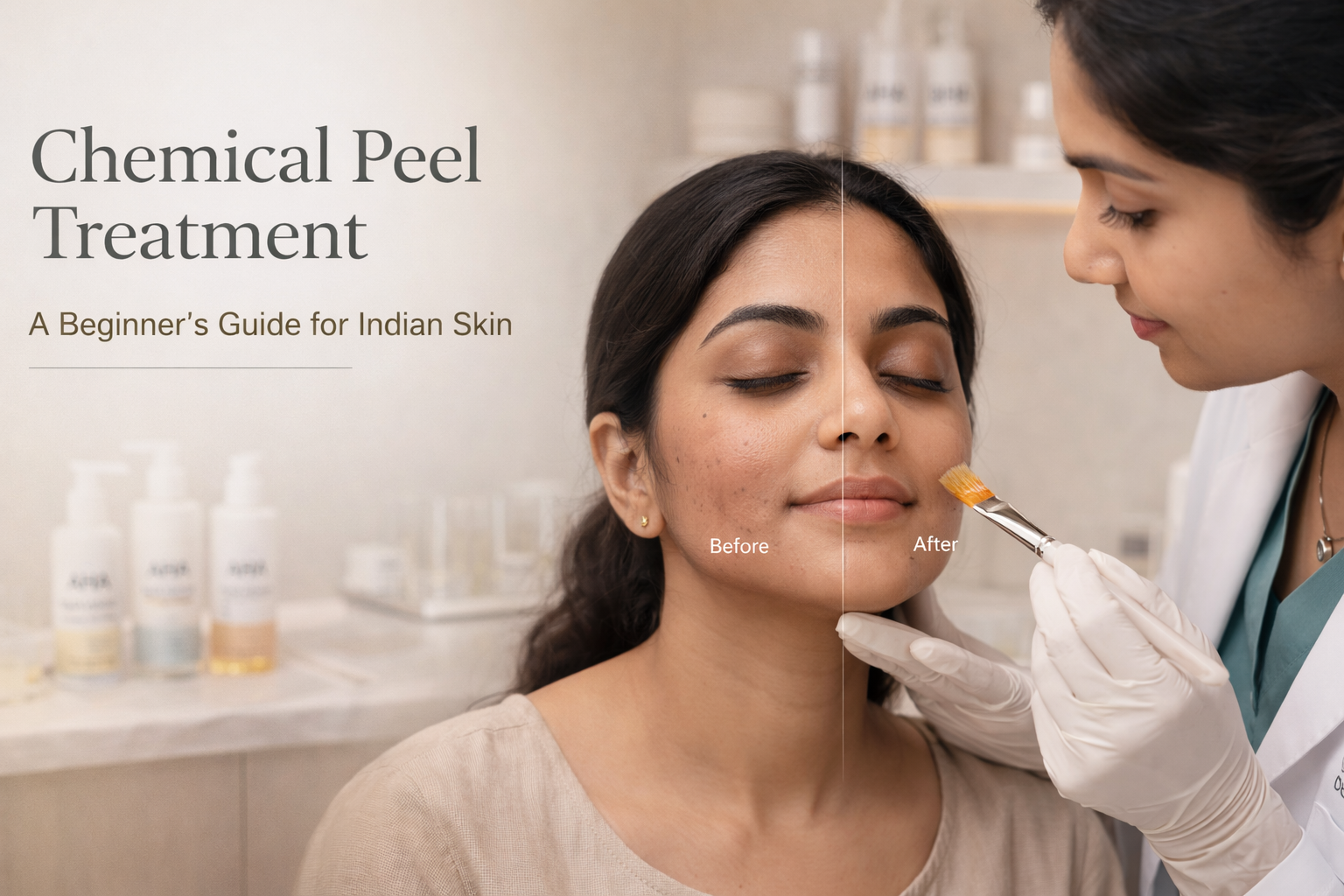
Yes — Vampire Facial (PRP facial treatment) pairs exceptionally well with chemical peel treatment, HydraFacial, and laser toning at Vesta Skin, T Nagar. Dr. Uma designs combination skin rejuvenation treatment Chennai protocols for patients with multiple concerns — typically alternating Vampire Facial sessions with complementary treatments every 3–4 weeks for maximum cumulative skin improvement.
- What is PRP facial cost Chennai at Vesta Skin?
PRP facial cost Chennai at Vesta Skin, T Nagar starts from ₹3,500 per session for topical-only PRP facial treatment, up to ₹12,000 per session for the premium Vampire Facial package including microneedling and booster serum. A 3-session Vampire Facial course ranges from ₹10,500 to ₹36,000 depending on the protocol selected — all packages include Dr. Uma’s direct supervision.
- What is the difference between Vampire Facial and Vampire Facelift?
Vampire Facial combines PRP with microneedling to improve skin surface quality — texture, tone, glow, and mild scarring. Vampire Facelift combines PRP with hyaluronic acid dermal fillers to restore facial volume and contour alongside natural skin rejuvenation treatment. Both Vampire Facial and Vampire Facelift are available at Vesta Skin, T Nagar, Chennai, under Dr. Uma’s supervision.
Conclusion — Is Vampire Facial Right for You in Chennai?
If you are looking for natural skin rejuvenation treatment that improves your skin from the inside out — without synthetic chemicals, significant downtime, or artificial results — the Vampire Facial (PRP facial treatment) is one of the most scientifically sound natural skin rejuvenation treatments available in Chennai.
The right Vampire Facial experience depends on choosing a clinic where a qualified dermatologist supervises your PRP facial treatment in Chennai, uses a centrifuge system that delivers clinically effective PRP concentration, and provides a customised post-Vampire Facial protocol suited to Indian skin.
Key takeaways:
- Vampire Facial uses your own PRP to stimulate collagen, improve texture, reduce acne scars, and restore glow on Indian skin
- Results are progressive — improving for 3–6 months after each PRP facial treatment session as collagen matures
- Safe for Indian skin — no allergy risk, suitable for all Fitzpatrick skin types with proper aftercare
- Vampire Facial cost in Chennai ranges from ₹10,500 for a 3-session topical course to ₹48,000 for a premium Vampire Facial combination package
- 3–4 sessions achieve optimal PRP facial treatment results — annual maintenance sustains them long-term